
How an SEO Agent Lets a Team Do More and Drive More Results for Clients
Every new client account adds the same SEO research and the same updates to someone's week. Nick built this AI agent to take that weight off the team. It connects the tools behind the work, gathers the data, proposes tasks, and makes the changes the human expert approves. The team gets about 20 hours back every week, so it can do more for every client and drive more results.
All numbers are estimates.
The Old Way: Every Account, One at a Time
The work started with manual SEO research across several paid tools. Once that was done, the slow part was still ahead, because someone had to make every change by hand, one account at a time. More accounts meant more hours, and those hours went to repetition instead of the work that moves a client forward.
What We Built: An SEO Agent
We connected everything using APIs, which let one piece of software send information to another. The agent does the legwork, and the human expert makes the calls.
- Gathers the data: The information that used to take manual research now comes in through connected tools.
- Makes the changes: Updates go out to client sites through those same connections. Each one waits in an approvals queue, so the human expert stays in the driver's seat.
- Keeps the work organized: A weekly data run keeps each client's numbers current, and a small project board inside the tool replaced another paid subscription.
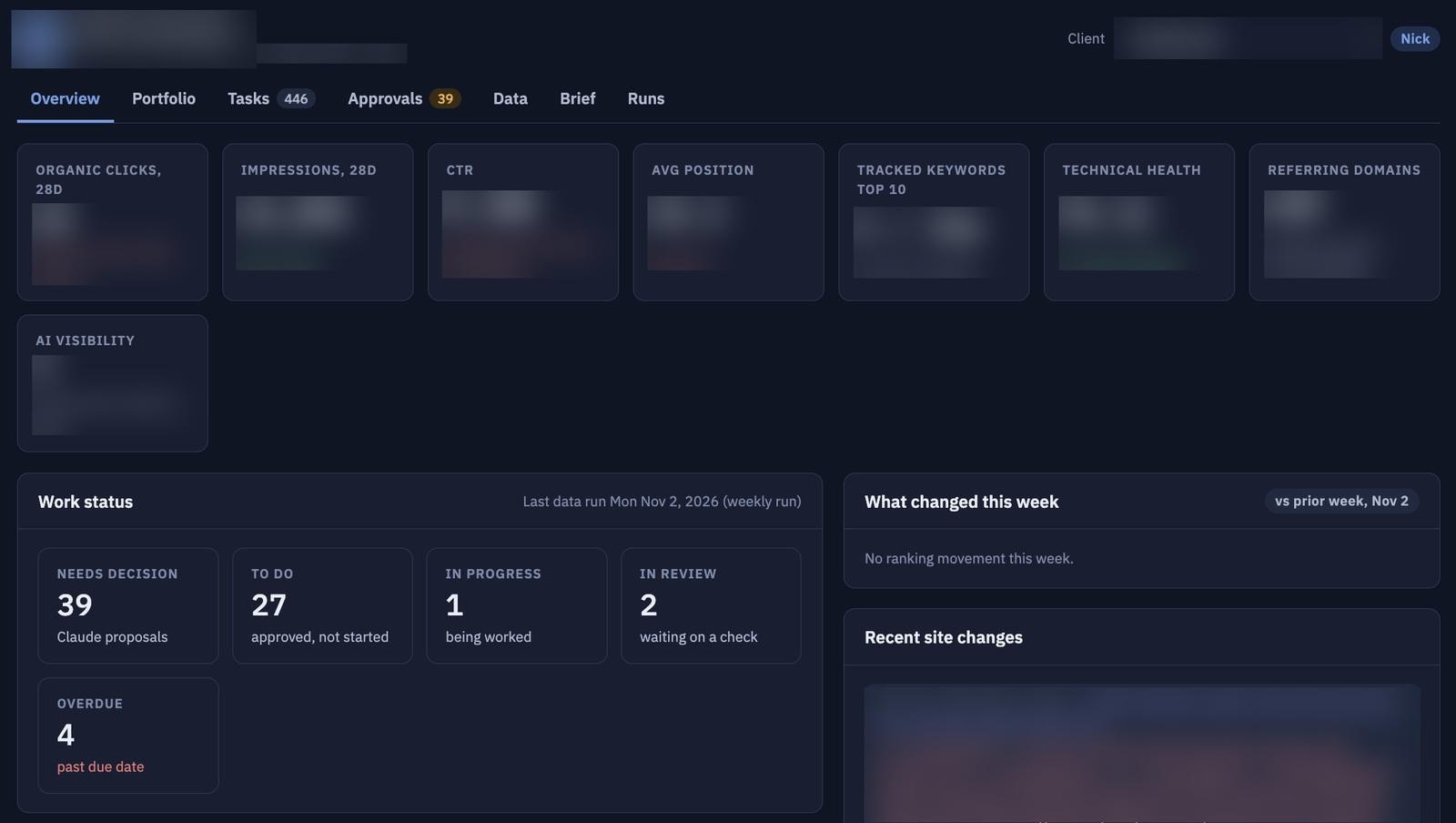
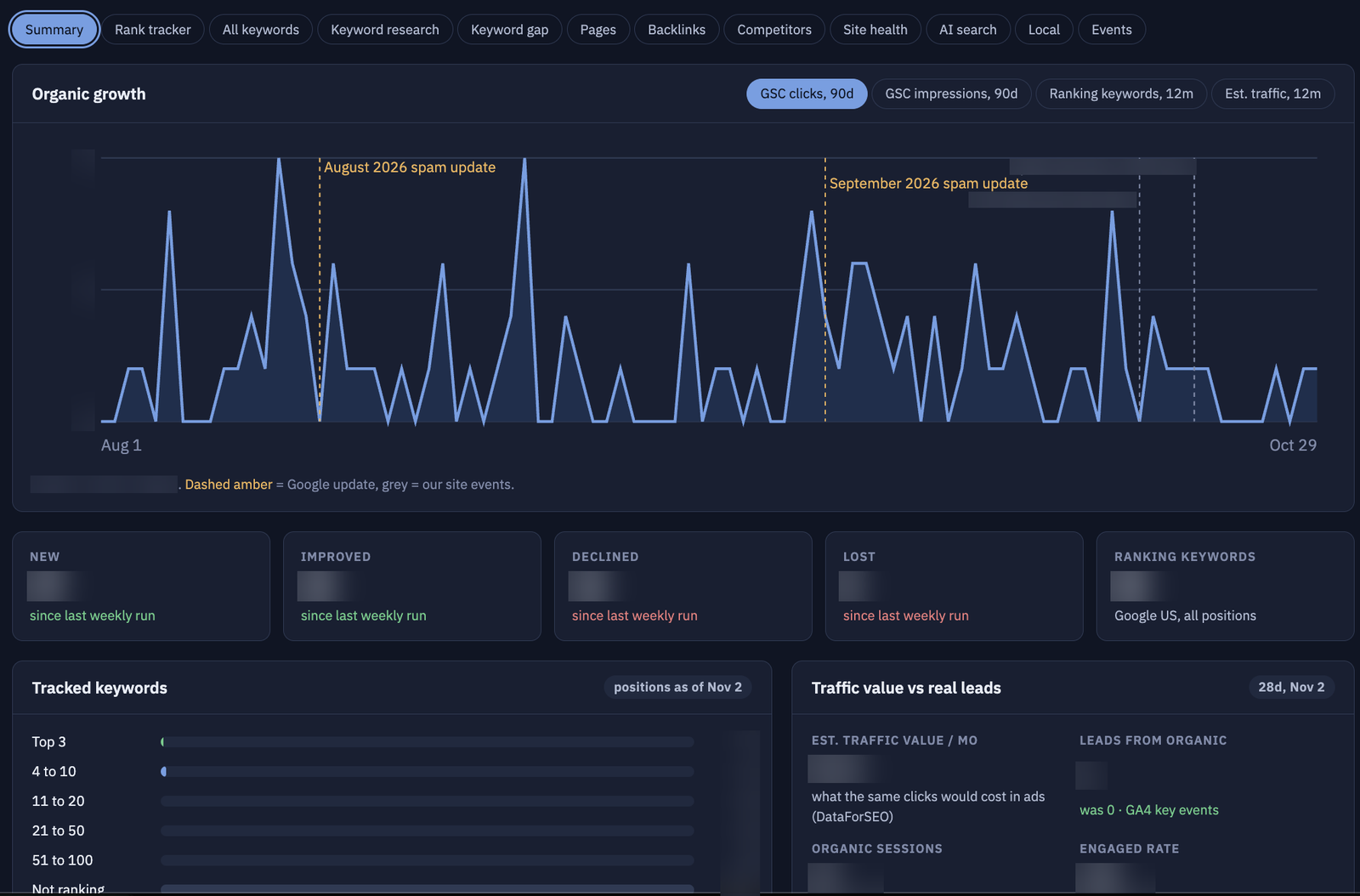
Site names and performance numbers are blurred for privacy.
Results: More Done in Less Time and More Results for Clients
The team now works from fresher data, acts on it faster, and gets more done for every client in less time, which drives more results. It also frees up about 20 hours every week. Over a year, that's about 1,040 hours, or half of a full-time position, worth about $52,000 at an estimated staff cost of about $50 an hour. That time goes back into the work that needs a human expert.
What This Could Look Like for Your Business
If your team manages many clients, locations, or projects, you've probably seen this problem: someone pulls information from several tools, then updates something else by hand, again and again. A custom tool can bring those steps together so your people review and approve while the software does the rest, and your team gets more done for every client. A process review will show whether a build makes sense for your work.